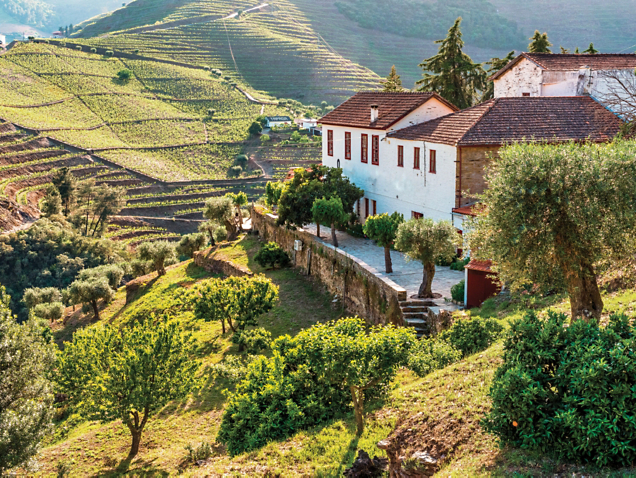
The Douro Valley stands among the world's oldest demarcated wine regions, where the vine has grown since antiquity. It all began with Romans cultivating grapes throughout their long occupation of the Iberian Peninsula, transforming casual cultivation into systematic production as they introduced advanced techniques and built the stone terraces that still define the landscape today.
Archaeological discoveries throughout the valley—including remnants of stone lagares (treading tanks) and amphorae (ancient jars)—reveal that wine production flourished during Roman times. Following the establishment of the Kingdom of Portugal in the 12th century, the country became an important wine exporter, though the distinctive character of what we now know as port would not emerge for several more centuries.
Boozy Brexit, 1386
The Douro's transformation into a legendary wine region can be traced to diplomatic relations between England and Portugal. The Treaty of Windsor, signed in 1386, established a close alliance and strong trading relationship between the two nations. Many English merchants settled in Portugal, where the treaty awarded them special privileges, and by the late 1400s, shipments of Portuguese wine to England had become substantial.
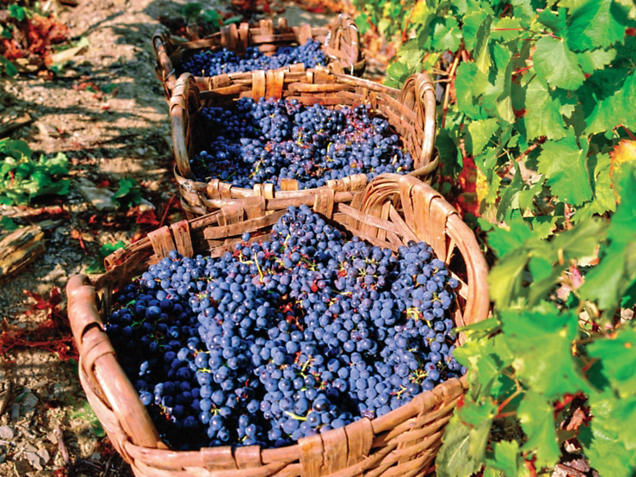
The Douro Valley’s grapes have been collected for winemaking since ancient Roman times.
The relationship strengthened in 1654 when a new trade agreement created even more favorable conditions for English and Scottish merchants living in Portugal. From England they brought salted cod (known as bacalhau), wool, and cotton cloth. In return, they shipped Portuguese agricultural produce—including the thin, astringent wines of the coastal Minho region.
The 1703 Methuen Treaty further encouraged trade by setting much lower English duties for Portuguese than for French wines. This timing proved fortuitous—a blockade of English goods to France, imposed in 1667, had caused King Charles II to prohibit French wine imports. English merchants quickly seized this opportunity but soon discovered that the harsh wines of coastal regions did not suit English palates. Their search for more appealing options led them inland to the remote hills of the upper Douro Valley.
"Grape Expectations"
The Douro—with its scorching summer heat and arid climate—produced the robust and heady wines that the market wanted. However, transporting wine overland from the Douro Valley to coastal ports proved impossible. The only viable transportation method was by boat down the Douro River. Gradually, English merchants relocated their businesses to the large mercantile city of Porto near the river's mouth. By 1710, most had established their "lodges," or warehouses, in Vila Nova de Gaia on the south bank of the Douro, where many remain to this day.
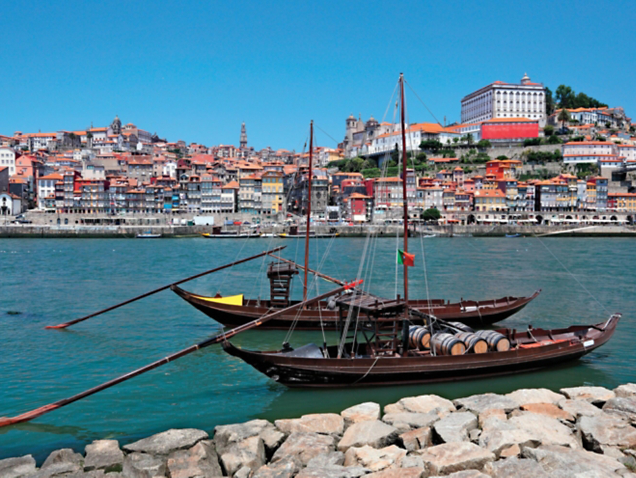
Traditional boats on the Douro River, with a view of Porto’s old town in the background.
It was from Porto—the city from which it was shipped—that this powerful wine took its name: Vinho do Porto in Portuguese, meaning "wine of Porto," translated into English as port wine or simply port. The earliest known record of wine shipped under this name dates from 1678.
At that time, port was not the rich, fortified wine we know today. Most was dry, although a small amount of brandy was often added prior to shipment to ensure it remained in good condition until reaching consumers' tables. The evolution of modern port resulted from practical necessity rather than planned innovation. During the 17th century, merchants seeking to preserve wines for the long journey to England added small amounts of brandy to stabilize them.
Making it Official
The 18th century saw port shipments grow rapidly as the Douro Valley wines gained popularity. The strong demand brought great prosperity but also encouraged speculation and fraud. When shipments fell sharply in the 1750s, these problems became widespread.
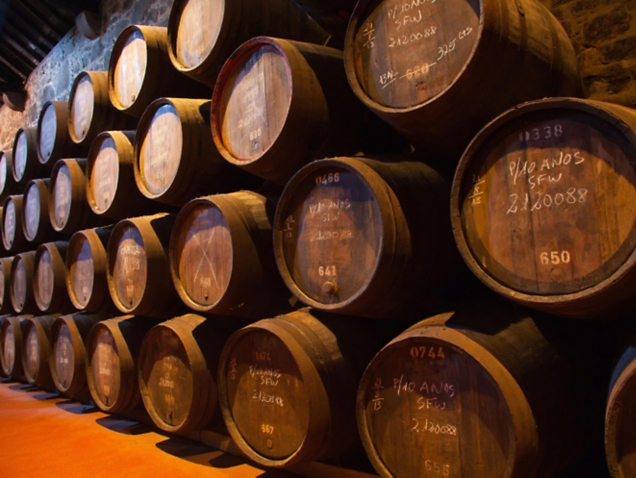
Wooden barrels hold port fortified wine to mature in wine cellars.
In 1756, Portugal's powerful first minister, the Marquis of Pombal, introduced revolutionary reforms. He imposed a state monopoly over port sales and shipments to England and Brazil, as well as over the production of brandy used for fortification. Most significantly, he defined the boundaries of the port vineyard area, marking them with over 300 stone posts known as "marcos pombalinos." The following year, he conducted the first detailed classification of Douro vineyards, grading them according to quality and establishing prices for their production.
The best wines were designated as "vinhos de feitoria" and allowed shipment to the demanding English market, while lesser "vinhos de ramo" could only be sold in Portugal. Measures eliminated fraudulent practices that had become commonplace, such as adding elderberry juice to give color and the appearance of quality to poor wines.
These visionary reforms effectively established port as the world's first appellation d'origine contrôlée—predating similar systems in France by over a century. Although initially unpopular with both producers and merchants, they heralded a new era of growth and affluence while fundamentally changing how wine regions would be defined and protected globally.
Phylloxera fighters
It was in the second half of the 18th century that the technique of fortification as practiced today gradually became widespread. By the late 1700s, adding brandy during fermentation—rather than after—became increasingly common. This arrested fermentation before all the natural grape sweetness converted to alcohol, ensuring the wine never spoiled and creating a sweeter, more robust product that captivated English palates. Although this method didn't become universal until around 1850, by the end of the 18th century, the practice was well established.
Throughout the 18th and 19th centuries, transporting new wines downriver to port shippers' lodges fell to the remarkable "barcos rabelos." These flat-bottomed river boats, with distinctive long steering oars and broad sails, carried heavy loads of port casks through lethal rapids, treacherous shoals, and narrow gorges of the fast-running Douro.
The Douro weathered numerous challenges, including the devastating phylloxera outbreak in the 1860s-70s. This deadly American vine louse destroyed many of the valley's finest vineyards before being controlled by grafting Portuguese varieties onto resistant American rootstock. Many vineyard owners were financially ruined, and the vestiges of old terraces never replanted after phylloxera can still be seen throughout the valley.
While port remains the Douro's flagship product, the late 20th century witnessed a renaissance in unfortified wines. Innovative producers began applying modern techniques to indigenous grape varieties—Touriga Nacional, Touriga Franca, Tinta Roriz, and others—creating sophisticated dry wines showcasing the region's unique terroir.
Today's Douro industry continues evolving while honoring traditions. Many producers maintain ancient practices like foot-treading grapes in granite lagares alongside state-of-the-art facilities. Sustainability has become increasingly important, with many vineyards converted to "vinha ao alto"—planting in rows running vertically up hillsides—a technique offering quality and environmental benefits.
Savor the robust flavors of Portugal's world-famous fortified wines while cruising past historic vineyards aboard the privately chartered, 130-passenger Douro Spirit on Grand Circle’s New! The Douro River: Lisbon to Porto River Cruise.