Imagine it's 1870, and you're standing at the edge of a bubbling, rainbow-colored hot spring surrounded by steaming geysers shooting water hundreds of feet into the air. The landscape looks almost otherworldly—so much so that when early explorers described it, people back East dismissed their accounts as tall tales and fantasy.
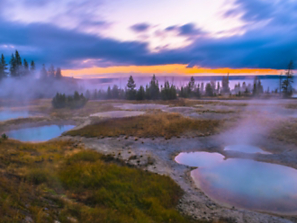
When westerners discovered the beauteous natural geysers of Yellowstone in the late 19th century, many felt as though they had discovered the gates of heaven itself.
Yet within two years, this "wonderland" would become Yellowstone National Park, the world's first national park, and spark a global movement that would forever change how humanity protects its natural treasures. Indeed, the story of national parks is fundamentally an American tale that became a worldwide phenomenon. It's a narrative of visionaries who dared to imagine that some places were too precious to be owned by any individual—that they belonged to everyone, forever.
An unfortunate truth
Long before the first park ranger donned a flat-brimmed hat, Indigenous peoples had been the original stewards of these lands. At least 27 federally-recognized Native tribes had connections to the Yellowstone region that dated back to time immemorial. The Crow called it "land of steam," while other tribes had their own sacred names for these geothermal wonders.
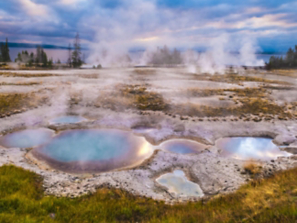
Before westerners discovered Yellowstone, Native Americans had their own sacred names for its famous rainbow-colored geysers.
However, the very people who had protected these lands for millennia would soon be excluded from them. The creation of Yellowstone as a national park turned Indigenous people, in the eyes of the federal government and park officials, into trespassers—a complex chapter in the otherwise inspiring story of conservation.
Birth of an idea
The national park concept emerged during a time of rapid American expansion. Artist George Catlin, traveling through the Dakotas in 1832, watched as westward migration threatened to destroy Native American cultures and pristine wilderness. He proposed something radical: a novel solution to this fast-approaching reality. Why not preserve these places in "a magnificent park.... A nation's Park, containing man and beast, in all the wild[ness] and freshness of their nature's beauty!"
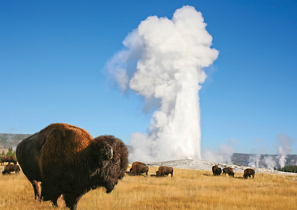
"Old Faithful" is one of Yellowstone’s most famous geysers—even the buffalo seem to enjoy it!
But it would take another four decades for this vision to become reality. The catalyst was Yellowstone, a region so fantastical that John Colter, the famous mountain man, was the first Anglo to travel through the area in 1807, returning with stories of "fire and brimstone" that earned the area the dismissive nickname "Colter's Hell."
Making history
Everything changed with the Hayden expedition of 1871. Ferdinand Hayden led a team of scientists, artists, and photographers—including the renowned Thomas Moran—to document Yellowstone's wonders. This time, they brought back proof: stunning paintings and photographs that enraptured the American imagination.
The timing was perfect. On March 1, 1872, President Grant signed the bill creating the nation's first national park at Yellowstone, setting aside 2.2 million acres as "a public park or pleasuring-ground for the benefit and enjoyment of the people."
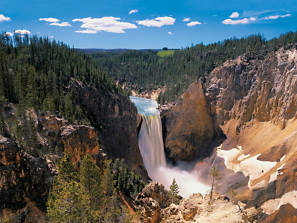
Beyond geysers, there are endless natural sites to visit in Yellowstone.
What made this act revolutionary wasn't only the preservation of land, but the philosophy behind it. For a young nation obsessed with progress and development, the idea of setting aside valuable land purely for public enjoyment and natural preservation was radical. Many congressmen gave it their support simply because they believed the rugged and isolated region was of little economic value.
Growing pains
Creating a park was one thing; protecting it was another. Early Yellowstone faced rampant poaching, vandalism, and illegal settlements. The solution came from an unexpected source: the U.S. Army took charge in 1886, establishing a pattern of protection that would later inspire the ranger system.
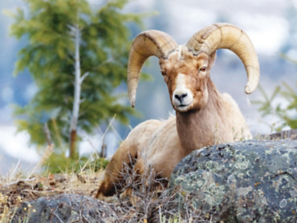
With all the wildlife who call Yellowstone home—such as this Bighorn Sheep—it’s unfortunately not too surprising that the park initially faced rampant illegal poaching.
The movement gained momentum. By 1916, America had 35 national parks and monuments, but they were managed by different departments with conflicting priorities. President Woodrow Wilson solved this chaos by creating the National Park Service, tasking it with a seemingly impossible dual mandate: preserve nature unimpaired while making it accessible for public enjoyment.
Going global
The founding of Yellowstone National Park began a worldwide national park movement. Today more than 100 nations contain some 1,200 national parks or equivalent preserves. What started as an American experiment became humanity's answer to the question: How do we save the best of our planet for future generations?
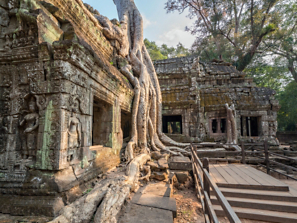
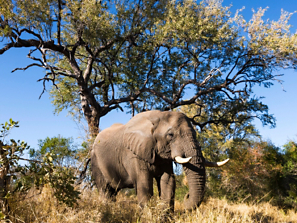
The idea spread like wildfire. Australia created the Royal National Park seven years later. In 1885, Banff National Park became Canada's first national park. Each nation adapted the concept to its own needs—from protecting African wildlife in the Serengeti to preserving ancient ruins at Angkor Wat.
Today, there are now more than 6,500 national parks in the world that preserve the natural wonders of countries and cultures for generations to come. The movement has evolved beyond natural wonders to include sites of cultural or historical magnitude, from Civil War battlefields to civil rights landmarks.
Modern challenges
The national park idea faces 21st-century challenges. Climate change threatens ecosystems, record-breaking visitor numbers strain infrastructure, and Indigenous communities rightfully demand recognition of their ancestral connections to these lands. Yet the core principle endures: some places are too precious to lose.
Recent developments show the movement's continued vitality. In 2020, America added New River Gorge as its newest national park. Meanwhile, countries worldwide are establishing marine parks, recognizing that conservation must extend beneath the waves. The movement that began with geysers and hot springs now encompasses coral reefs and kelp forests.
The legacy of that first park in Wyoming continues to ripple outward. More than 100 countries now have national parks, each adapted to local needs but united by a common vision: preserving the irreplaceable for all humanity.
From Yellowstone's geysers to the Serengeti's endless plains, from the Amazon's green cathedral to the Himalayas' soaring peaks, national parks stand as humanity's promise to the future—that we recognized beauty when we saw it, and we had the wisdom to save it.
Behold the beauty of Yellowstone for yourself during Grand Circle’s New! The American West: Cody, Yellowstone & Jackson Hole Land Vacation.