
While hanging red peppers to dry was once a symbol of harvest time, a string can brighten up your kitchen year-round—a perfect souvenir to bring home from our Eastern Europe to the Black Sea River Cruise Tour.
If you were to peek inside any kitchen cabinet across Hungary, you would likely find one spice in particular: Paprika.
Also known as "red gold" by Hungarians, this flavorful, smoky spice is the cornerstone of some of the country’s most beloved cuisine, particularly paprikás csirke, or chicken paprikash. Like most comfort foods, paprikash was a dish with origins in the countryside. The southern part of Hungary was home to countless pepper farms, especially in Kalocsa and Szeged, so the primary ingredient was plentiful.
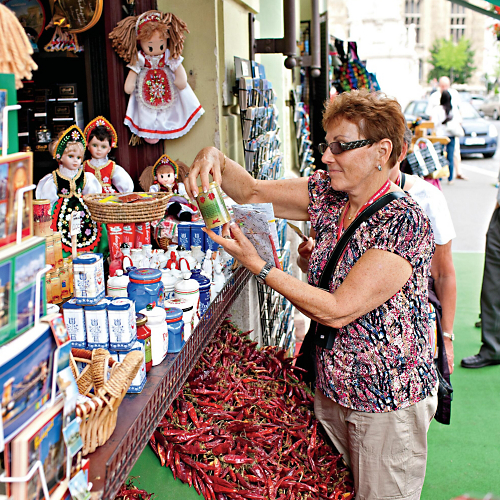
A Grand Circle traveler shops for paprika at a market stall in Budapest.
Today, these two regions still boast the majority of Hungary’s pepper farms and every September 8th, the paprika harvest begins. Collecting the vibrant, red peppers requires a great deal of manual labor. In the Kalocsa region, farmers typically employ a combine harvester while farmers from Szeged prefer to pick the bright peppers by hand. Whichever method is used, all the harvested peppers are left to rest for two to three weeks before being sent to a mill to be dried and ground. Traditionally, farmers would hang the paprika from roofs, ceilings, or walls of their homes—the peppers developing an even richer, deeper red as time passed. This practice is far less common today; the paprika is simply stored in a cool, dry place.
To mark the season of Hungary’s "red gold," festivals are often held throughout the country. One of the most well-known can be found in the town of Kalocsa. For two days in September, thousands of locals and tourists alike gather here to celebrate this beloved spice with cooking competitions, the Paprika Harvest Parade, traditional folk dances—even the coronation of a Paprika Queen. And of course, all attendees savor their fill of paprika-lavished dishes before leaving with a fresh mill of spice to take home as a souvenir.
Though paprika remains Hungary’s signature spice, growing it has become a far less popular calling for younger farmers. Over fifty years ago, approximately 24,700 acres of land was devoted to pepper farms; nowadays only about a tenth of the acres remain. Despite this, Hungarians continue to extol the virtues of this fiery seasoning—keeping their traditions alive and their cuisine perfectly spiced.
Learn more about Hungary’s passion for paprika during Eastern Europe to the Black Sea.
Get The Inside Scoop On...
Like what you see here? Receive weekly updates right in your inbox.
inside-scoopArticles In This Edition
